Your resume isn't just a list of past jobs anymore. It's your professional highlight reel, a compelling story of your achievements that has to be clear, concise, and targeted to get noticed.
Building a Modern Resume That Stands Out
Staring at a blank page is the worst. But crafting a resume that actually gets you interviews doesn't have to feel like a chore. The real goal is to build a narrative that proves you're the perfect person for the job. And that starts with understanding what recruiters and those pesky Applicant Tracking Systems (ATS) are really looking for.
Stop describing what you did and start showcasing what you achieved. This one change can take a bland job description and turn into something that actually illustrates your value.
Understanding the Modern Hiring Landscape
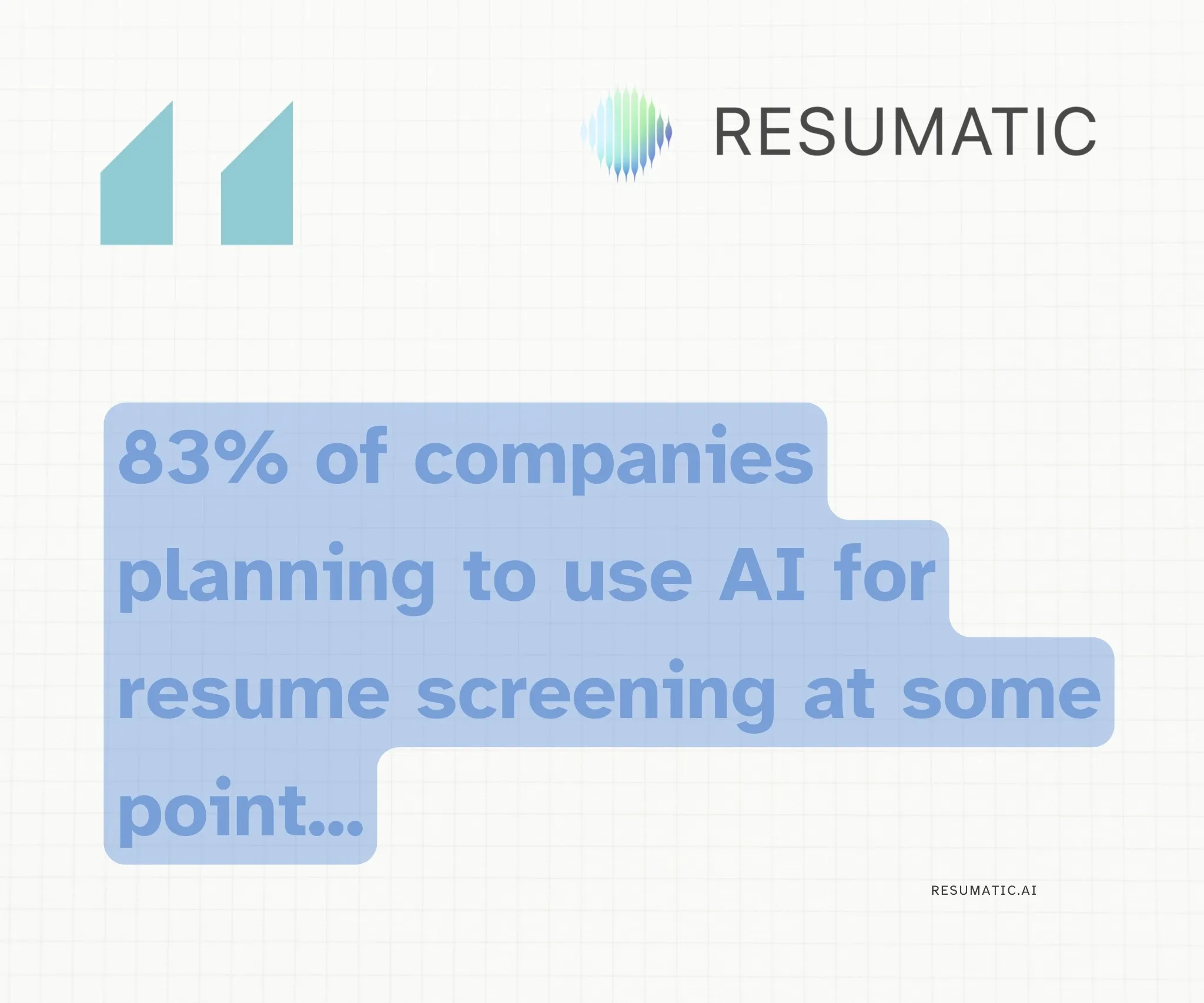
AI has changed the hiring game. With 83% of companies planning to use AI for resume screening at some point, a piece of software is often the first "reader" of your application.
But here's the catch: a recent U.S. study found that 62% of hiring managers are more likely to toss a resume that looks like it was written entirely by AI without any human touch. This means your resume has to walk a fine line. It needs to be machine-readable and authentically human.
Your resume is no longer a historical record of your work. It's a strategic marketing tool designed to survive a 10-second scan from both a robot and a recruiter. Every single word and design choice has to serve that one purpose.
The Core Components of a Winning Resume
Before you start typing, let's break down the essential building blocks. Getting the structure right is half the battle because a professional layout makes it easy for recruiters to find what they need in a hurry.
Choosing one of our professional resume templates can give you a huge head start with a format that's already been optimized for success.
Here's a quick look at the core sections and what they do.
Core Components of an Effective Resume
Resume Components Interactive Guide
Core Components of an Effective Resume
1
Contact Information
Your name, phone, professional email, and LinkedIn URL, placed right at the top.
Why It Matters
This is your digital handshake. It must be professional and incredibly easy to find. Make sure your email is professional (firstname.lastname@email.com), your phone number has a professional voicemail, and your LinkedIn profile is up to date.
2
Professional Summary
A 2-3 sentence elevator pitch that hooks the reader with your top skills and wins.
Why It Matters
It's the first thing a recruiter reads and your best chance to make them keep reading. A strong summary immediately positions you as the right candidate and sets the tone for the entire resume. Focus on your years of experience, key achievements, and most relevant skills.
3
Work Experience
Bullet points detailing your accomplishments, not just your duties, in previous roles.
Why It Matters
This is the heart of your resume, where you provide concrete proof of your value. Focus on quantifiable achievements using the Action + Impact framework. Each bullet should start with a strong action verb and end with a measurable result that demonstrates your contribution.
4
Skills Section
A dedicated list of your key hard and soft skills, tailored to the job description.
Why It Matters
It's prime real estate for keyword optimization to get past ATS filters. Organize your skills into clear categories (Technical, Industry-Specific, Soft Skills) and make sure every skill you list is backed up with evidence in your work experience section.
5
Education
A short, simple section listing your degree, university, and graduation date.
Why It Matters
Provides essential background information and confirms your qualifications. Keep it concise but complete. For recent graduates, this section goes near the top; for experienced professionals, it typically goes near the bottom. Include relevant certifications and coursework if applicable.
Each part has a specific job to do, working together to create a powerful and convincing story about your career.
Tailoring Your Resume for Every Application
If there's one secret I can share about writing a resume that actually gets results, it's this: stop sending the same generic document everywhere. Customizing your resume isn't just a nice little trick; it's the single most effective thing you can do to get past that first screening.
Sending a one-size-fits-all resume is like using the same key for every lock. It just won’t work.
Think of it this way: a company posts a job description because they have a specific problem they need to solve. Your resume's only job is to prove, in less than ten seconds, that you're the perfect solution. A generic document can’t do that, but a tailored one absolutely can.
Why Customization Is a Game-Changer
The data on this is crystal clear. One analysis of over 59,000 resumes found that tailored applications had a 5.75% conversion rate from application to interview. Generic ones? They converted at a measly 2.68%. That means you're more than twice as likely to land an interview just by customizing your resume.
This does more than just get you past the Applicant Tracking Systems (ATS). It shows the hiring manager you've done your homework and are genuinely interested in their company and this specific role. It’s a powerful signal that you're a proactive and thoughtful candidate.
A tailored resume isn't about rewriting your entire history for every job. It's about strategically adjusting the spotlight to illuminate the skills and achievements that matter most to that specific employer.
Decoding the Job Description
The job description is your road map. Seriously. Before you change a single word on your resume, you need to become an expert on what the employer is actually looking for. This is where you'll find the exact keywords and phrases you need to get noticed.
Let's break down a real-world example. Imagine you’re applying for a "Content Marketing Manager" position. The job description might list these responsibilities:
Develop and execute a comprehensive content strategy across blogs, social media, and email newsletters.
Manage a team of freelance writers, providing feedback and ensuring brand voice consistency.
Analyze content performance using Google Analytics and SEMrush to inform future strategy.
Collaborate with the design team to create compelling visual assets for campaigns.
From just these four points, you’ve got a goldmine of keywords: content strategy, brand voice consistency, Google Analytics, SEMrush, and collaborate. These are the exact terms you need to mirror in your resume. After you've built a solid foundation, it's crucial to learn how to tailor a resume to a job description for every single application.
The key takeaway here is that shifting from a static document to a dynamic, tailored one is the critical step to standing out in today's hiring environment.
Weaving Keywords into Your Resume
Once you have your list of keywords, it’s time to strategically place them throughout your resume. The goal is to make them feel natural, not like you're just stuffing them in. Here are the most important spots to focus on.
Your Professional Summary
This is prime real estate. Your summary should be a direct response to the job description, immediately highlighting your most relevant qualifications.
Generic Summary:Experienced marketing professional with a background in content creation and team management.
Tailored Summary:Content Marketing Manager with 8+ years of experience developing high-impact content strategies. Delivered massive audience growth, using SEMrush and Google Analytics to increase organic traffic by over 200%.
See the difference? The second one speaks their language.
Your Work Experience Bullets
This is where you provide the proof. Go through your existing bullet points and rephrase them to include the target keywords and reflect the priorities of the role.
Before:Wrote articles for the company blog.
After:Executed a data-driven content strategy for the company blog, increasing monthly organic views from 10k to 50k in one year.
Before:Checked the work of our freelance writers.
After:Managed a team of 5 freelance writers, ensuring brand voice consistency across all published content and improving content quality scores by 30%.
By making these small but powerful changes, you're not just telling them you have the skills. You’re showing them you've already delivered the exact results they’re looking for. This is how you write a resume that doesn't just get read, it gets a response.
Writing Bullet Points That Showcase Achievements
Your work experience section is the engine of your resume. But here’s a mistake I see all the time: people just list their job duties. That tells a recruiter what you were supposed to do, not what you actually did. Let's fix that.
This is where you shift from passive descriptions to active, compelling stories about your impact. It’s the difference between saying "responsible for social media" and proving you grew a following that drove real business results. The goal is simple: show a potential employer the value you created in the past, so they can’t help but imagine you creating that same value for them.
From Passive Duty to Active Achievement
To make your experience pop, every bullet point needs to do more than just state a task. It should tell a mini-story of success. The best way to do this is with a simple but powerful framework: Action + Impact.
This framework forces you to connect every action you took with a meaningful, measurable result. It’s a small shift that transforms your resume from a boring list of responsibilities into a portfolio of achievements.
Here’s how it breaks down:
Action Verb: Kick off every bullet point with a strong action verb that describes what you did. Words like "engineered," "slashed," or "spearheaded" are far more engaging than passive phrases like "was responsible for."
Specific Task: Briefly explain the project or task you worked on. This gives the hiring manager the context they need to understand your contribution.
Measurable Result: This is the most critical part. End your bullet point by showing the outcome. How did you save time, boost revenue, improve a process, or delight customers?
Let's see how this small change makes a big difference.
Think of each bullet point as a tiny case study. It presents a problem (the task), describes your solution (the action), and showcases the positive outcome (the impact). This is how you prove your worth before you even walk into an interview.
The Power of Quantification
Numbers are the universal language of business. They cut through the noise and provide concrete proof of your accomplishments. Quantifying your achievements is the single best way to make your impact undeniable and help a recruiter quickly grasp the scale of your contributions.
Instead of saying you "improved efficiency," show it by stating you "reduced project completion time by 15%." Rather than just "managed a team," be specific: "led a team of 8 engineers."
Here are a few examples that show the shift from a vague duty to a quantified achievement.
Customer Service Example
Before: Answered customer support tickets and resolved issues.
After: Resolved an average of 50+ customer support tickets daily, maintaining a 98% customer satisfaction score over 12 months.
Software Development Example
Before: Worked on developing a new mobile application.
After: Engineered a new feature for the mobile app that increased user engagement by 30% and reduced bug reports by 25% in the first quarter post-launch.
Marketing Example
Before: Managed the company's social media accounts.
After: Grew social media engagement by 45% over six months by implementing a new content strategy focused on video and user-generated content.
This approach doesn't just make your resume stronger; it also gets you ready for interviews. When you’ve already put numbers to your successes, talking about them confidently becomes second nature. For more inspiration, check out our library of industry-specific resume examples to see how other professionals frame their wins.
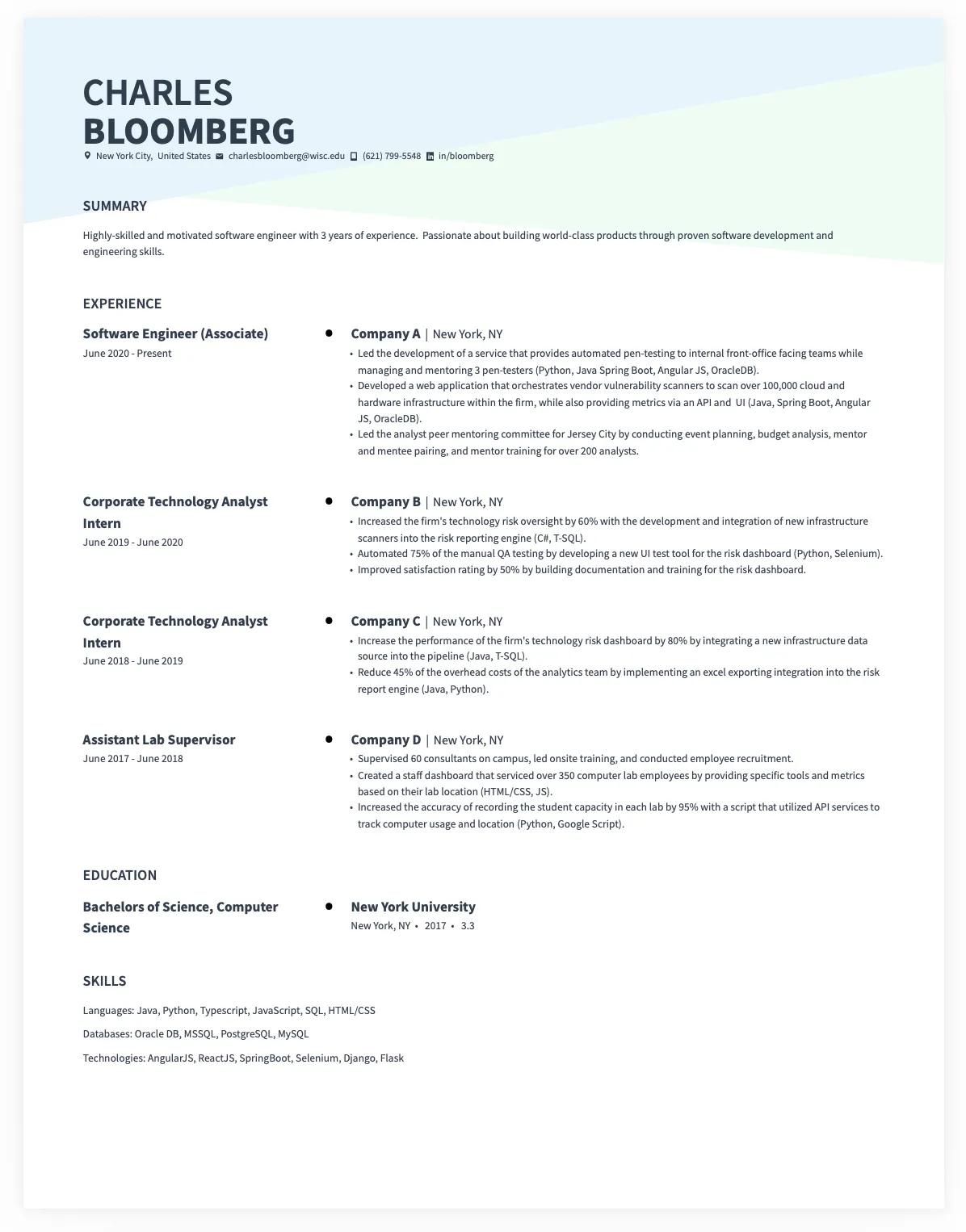
Example of a software developer resume you can create with Resumatic
What If You Don't Have Hard Numbers?
"But what if I don't have exact numbers?" It’s a common question, and a good one. Not every accomplishment comes with a neat percentage or dollar sign. That’s okay. When you can't quantify with hard data, you can still show your impact by focusing on scope, scale, and specific outcomes.
The goal is to provide context that helps the reader understand the significance of your work. You can do this by painting a "before and after" picture or by describing the scale of the projects you handled.
Here are a few ways to show impact without precise metrics:
Focus on Scope: Describe the size or reach of your work. For example, "Coordinated a national sales conference for over 500 attendees from 30 different states."
Highlight Scale: Talk about the complexity or volume you managed. For instance, "Oversaw the transition of the company's entire client database from a legacy system to a new cloud-based CRM with zero downtime."
Describe the Outcome: Explain the positive result in clear terms. For example, "Implemented a new filing system that was adopted company-wide and became the new standard for document management."
Even without a specific number, these descriptions paint a vivid picture of your capabilities. That's exactly what a great resume should do. The key is to always think beyond the task and focus on the result.
How to Structure Your Resume for Skills-Based Hiring
The old rules of resume writing are officially dead. I’ve seen it time and time again: employers are now far more interested in what you can do than where you went to school or the exact titles you’ve held. This shift toward skills-based hiring means your resume needs a new game plan, one that puts your abilities front and center.
This isn't just some passing trend; it's a massive global movement. Right now, 73% of employers worldwide have adopted skills-based hiring practices. For you, this means your resume's main job is to broadcast your practical skills and concrete achievements.
Digging into the numbers, a recent HR report found that 65% of hiring managers will hire someone based on skills alone, and a whopping 81% now see AI-related skills as a top priority. It's clear that the game has changed.
Your resume structure has to adapt to this new reality. The goal is simple: make it incredibly easy for a recruiter to see your value in a quick scan. That means highlighting your most relevant skills right at the top.
Choosing the Right Resume Format
The reverse-chronological format is what most of us are used to, but it's not always the best choice for a skills-first world. It tends to put all the emphasis on job titles and company names instead of what you can actually do.
A hybrid resume format is often your best bet. This approach blends the best of both worlds, leading with a powerful summary and a detailed skills section at the very top, followed by your work experience in reverse-chronological order. It immediately tells the reader, "Here’s what I can do, and here’s where I've done it."
A hybrid format lets you control the narrative. It puts your most valuable and relevant skills in the spotlight before a recruiter even gets to your job history, which makes for a much stronger first impression.
This approach is perfect for career changers, tech professionals, or really anyone whose most impressive qualifications are their technical and practical skills rather than a straight, linear career path. You can dive deeper into this in our guide on the best resume formats to see which style is the right fit for you.
How to Organize Your Skills Section
A messy, disorganized skills section is a huge missed opportunity. Just dumping a dozen skills into a single block makes it impossible for recruiters to find what they're actually looking for. Instead, you need to categorize your skills to create a clean, scannable, and impactful layout.
Breaking your skills into logical groups not only makes your resume easier to read but also shows the true breadth of your expertise.
Here’s a straightforward way to group your skills for maximum clarity:
Technical Skills: This is for specific software, programming languages, and tools. Think Python, Salesforce, Adobe Creative Suite, or Google Analytics.
Industry-Specific Skills: These are abilities directly tied to your field. For a marketer, this might be SEO/SEM, Content Strategy, or A/B Testing. For a project manager, it could be Agile Methodologies or Scrum.
Soft Skills: While you'll mostly demonstrate these in your work experience, it helps to list a few key ones like Leadership, Cross-Functional Collaboration, or Client Relations.
Languages or Certifications: Give any language fluencies or professional certifications their own clear, separate categories.
When you organize your skills this way, you make it dead simple for a hiring manager to quickly confirm you have the specific qualifications they need for the role.
A well-organized skills section should distinguish between your technical abilities (hard skills) and your interpersonal strengths (soft skills). Hard skills are the teachable, technical competencies, while soft skills are the personal attributes that dictate how you work and interact with others. Both are critical, but they need to be presented differently to be effective.
Here’s a breakdown to help you showcase both types of skills on your resume.
Hard Skills vs Soft Skills Examples
Hard Skills vs Soft Skills Guide
Hard Skills vs Soft Skills Examples
Effectively showcasing both hard and soft skills paints a complete picture of your capabilities,
showing recruiters not only what you can do but also how you do it.
Weave these into your bullet points by describing how you achieved results. Don't just list them—demonstrate them through your accomplishments.
"Led a cross-functional team of 5 to deliver a product relaunch 2 weeks ahead of schedule with zero critical defects."
Effectively showcasing both hard and soft skills paints a complete picture of your capabilities, showing recruiters not only what you can do but also how you do it.
Backing Up Skills with Evidence
Listing a skill is one thing; proving it is another. A powerful skills section is always supported by concrete evidence in your work experience section. Every skill you list at the top of your resume should be a "teaser" for an achievement you detail later on.
Think of it like a movie trailer. Your skills section shows the highlights, but your experience section delivers the full story. This connection is what makes your resume compelling and, more importantly, believable.
For instance, if you list "Data Analysis" in your skills section, a corresponding bullet point in your work history should prove it:
"Analyzed customer behavior data using SQL and Tableau to identify key purchasing trends, leading to a 15% increase in repeat customer sales."
This approach does two crucial things. First, it validates your claims, showing you haven't just listed a skill you barely know. Second, it provides a powerful, quantified example of how you used that skill to create real value for an employer. This synergy between your skills and experience sections is the secret to writing a resume that truly stands out in a skills-based hiring world.
You’ve spent hours crafting the perfect resume, tweaking every bullet point and tailoring every detail. You're almost there. But this last step, the final check before you hit "send," is where so many people trip up.
Think of it as the pre-flight check for your career. One tiny typo or a weird formatting glitch can be just enough for a hiring manager to move on to the next person. It signals a lack of attention to detail, which is a red flag no matter what job you're after. Let's make sure your resume is absolutely flawless.
How to List Skills on Your Resume
Don't write...
Write...
Communication skills
Public speaking, presentation skills, data visualization
Community engagement, customer support, frontline customer service
Proofread Like Your Job Depends On It
Because it really does. When you’ve been staring at a document for hours, your brain starts to see what it expects to see, not what’s actually there. You become blind to your own mistakes. Never, ever trust just your own eyes for the final review.
Here's a simple process I swear by:
Read it out loud. This feels silly, but it works. It forces you to slow down and catch awkward sentences and typos your eyes would normally skim right over.
Use a grammar checker. Tools like Grammarly or even the built-in editor in Microsoft Word are fantastic for a first pass. They won’t catch everything, but they’re your first line of defense.
Get a second set of eyes. This is non-negotiable. Ask a friend, a former colleague, a mentor, anyone with a good eye for detail, to look it over. A fresh perspective will spot errors you’ve missed 10 times.
I’ve seen applications get tossed for the simplest mistakes. Misspelling a previous company's name, getting the university name wrong, or, the worst, botching the hiring manager’s name in the cover letter. These are instant deal-breakers.
You can also run your document through an ATS resume checker guide for an instant, objective analysis. It will score your resume and flag hidden issues before a recruiter ever sees it.
Choose the Right File Format and Name
This seems like a tiny detail, but it speaks volumes about your professionalism. How you save and name your file is literally the first impression you make.
When it comes to the format, there’s one clear winner: PDF. It’s the gold standard. A PDF locks in your formatting, ensuring your resume looks exactly how you designed it, whether it’s opened on a Mac, a PC, or a phone. Word documents (.docx) can get messy and look different depending on the device or software version. Only send a Word doc if the job application specifically asks for it.
The file name is just as important. A resume saved as Resume.pdf is destined to get lost in a recruiter’s sea of downloads. Use a clean, professional name that includes your name and maybe the role.
Good:Jane-Doe-Marketing-Manager-Resume.pdf
Bad:MyResume_Final_v3_reallyfinal.pdf
Keep Your Versions Organized
If you’re tailoring your resume for each application, which you absolutely should be, you’ll quickly end up with a bunch of different versions. Sending the wrong one is an embarrassing and completely avoidable mistake.
A simple organization system is all you need. I create a dedicated folder for every single job I apply for. Inside, I save the tailored resume, the cover letter, and a copy of the job description itself.
For instance, your folder setup might look like this:
Job Applications
Company A - Project Manager
Job_Description.pdf
John-Smith-PM-Resume.pdf
John-Smith-PM-Cover-Letter.pdf
This little habit saves you from costly mistakes and makes it easy to pull up the exact documents you sent when you get that call for an interview. It's the final, professional touch that brings the whole process together.
Do's and Don't's
Resume Writing Do's and Don'ts
Resume Writing: Do's and Don'ts
Do
Tailor your resume for each application using keywords from the job description to get past ATS and show genuine interest
Quantify your achievements using the Action + Impact framework with specific numbers and measurable results
Lead with a professional summary that highlights your top skills and wins, not an outdated objective statement
Proofread thoroughly and save as a PDF with a professional filename like "YourName-JobTitle-Resume.pdf"
Don't
Send the same generic resume to every employer—customization is the single most effective thing you can do
Just list job duties without demonstrating the measurable impact and value you created
List skills without proof—every skill in your skills section should be backed up with evidence in your experience
Let your resume look AI-generated—62% of hiring managers will reject resumes that lack authentic human touch
Common Questions About Writing a Resume
Even after you think you've nailed down the basics, a few tricky questions always seem to pop up when you're writing a resume. It’s completely normal. Sometimes the smallest details can feel like the biggest hurdles. This section is here to give you some clear, straightforward answers to the dilemmas I see job seekers wrestle with all the time.
Think of this as your quick guide for handling those gray areas. Getting these little things right is that final layer of polish that makes your application feel truly professional.
How Long Should My Resume Be?
Let's clear this up: the one-page resume is still the gold standard, especially if you have less than 10 years of experience. Recruiters are juggling hundreds of applications. A powerful, concise one-page document respects their time and is far more likely to get a full read-through. It also forces you to be ruthless about what you include, leaving only your most impressive, relevant achievements.
However, the two-page resume isn't the taboo it once was, but it’s reserved for specific cases. If you're a senior-level pro with a long, storied career full of major wins, or you’re in a field like academia or science where publications and projects are everything, a second page might be necessary. Just make sure every single line on that second page is adding undeniable value.
The real rule is this: make your resume long enough to tell your story effectively, but not a single word longer. Don't add fluff to fill space, and don't cut critical achievements just to hit an arbitrary one-page limit.
When in doubt, shorter is almost always better. A punchy one-page resume will beat a watered-down two-pager every time.
Should I Include an Objective Statement?
In a word: no. The objective statement, that old-school sentence about the job you wanted, is a relic. It’s all about what you want, but employers are much more interested in what you can do for them.
The modern, much more effective, alternative is a Professional Summary. Think of it as your 2-3 sentence elevator pitch right at the top of your resume. It immediately sells your value by highlighting your top skills, key experiences, and biggest wins, all framed for the job you’re targeting.
See the difference?
Objective (Outdated):Seeking a challenging marketing role where I can utilize my skills in a growth-oriented company.
Summary (Modern):Results-driven Marketing Manager with 7+ years of experience developing content strategies that increased organic traffic by 150%. Proven ability to lead cross-functional teams and manage six-figure advertising budgets to exceed performance goals.
The summary is forward-looking and focuses on the employer's needs, making it a much stronger opening.
How Do I Handle Employment Gaps?
First, take a breath. Employment gaps are incredibly common and are no longer the automatic red flag they used to be. The trick is to be honest and confident about them without calling a giant spotlight to them. The one thing you should never do is lie or fudge dates. A simple background check will uncover that in a heartbeat.
Here are a few graceful ways to handle a gap:
Use years instead of months. If your gap is less than a full year, just listing the years you worked (e.g., 2021 - 2023) can visually smooth things over.
Focus on what you did. Were you taking courses, freelancing, volunteering, or caregiving? You can absolutely account for that time. A simple line item like "Professional Development" or "Freelance Consulting" can productively fill that space.
Have your story ready. Be prepared to briefly explain the gap in an interview. Frame it in a positive light, focusing on what you learned or how the time away gave you a fresh perspective for your next role.
At the end of the day, recruiters just want the best person for the job. A well-explained gap in an otherwise strong career history is rarely a deal-breaker. Your resume is about your strengths, so lead with those.
For more answers to tough questions, our team has put together a helpful FAQ resource with more insights.
Ready to build a resume that opens doors? Resumatic uses AI to help you craft a polished, ATS-friendly document in minutes. From keyword optimization to professional templates, we give you the tools to land more interviews. Get started for free at https://resumatic.ai and see the difference.
How to write a resume that gets you hiredLearn how to write a resume that impresses recruiters and beats screening software. Get practical tips and real-world examples to land more interviews.how-to-write-a-resume-that-gets-you-hired