Resume Objective vs Summary: Which to Use in 2026
Most advice on resume objective vs summary is too soft. The choice is usually simple. If you have relevant experience, use a summary. If you don't, use an objective or a hybrid that explains the move clearly.
The opening at the top of your resume shapes how recruiters and ATS read everything below it. If you haven't fixed your layout yet, do that first with one of these best resume formats, then choose the right opening using the rules below.
Table of Contents
- Decide Between a Resume Objective and Summary
- Know what each opening is trying to do
- Use simple examples to spot the difference
- Treat the opening as a filter
- Use an objective if you're a student or recent graduate
- Use a hybrid if you're changing careers
- Use a summary if you're an experienced professional
- Make the decision in under a minute
- Write a summary that proves value
- Cut filler from your summary
- Write an objective only when the resume needs direction
- Tailor the opening to the job description
- Use before and after rewrites
- Keep the opening honest
Decide Between a Resume Objective and Summary
Use this rule.
- Use a summary if you have relevant experience in the field you're targeting.
- Use an objective only if you have little or no relevant experience and need to explain what role you want.
- Use a hybrid if you're changing careers and need to connect past results to a new direction.
That's the entire decision framework. Most resumes should lead with a summary because it sells proven value instead of intent. Objectives still have a place, but it's narrow. The mistake isn't writing an objective. The mistake is writing one when your work history already gives you better material.
Understand the Two Types of Resume Openings
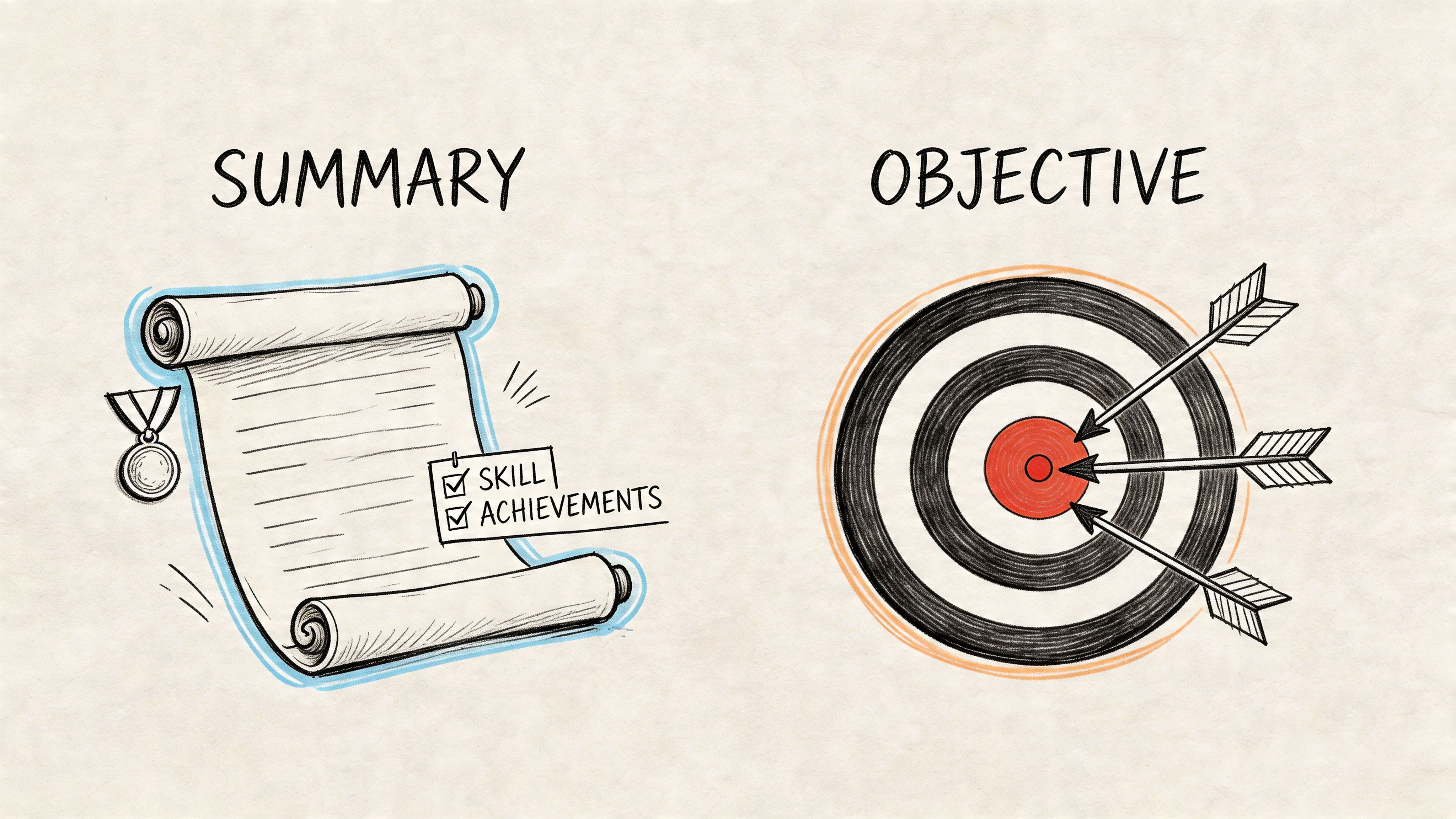
A resume summary looks backward. It tells an employer what you've already done, what you're good at, and what results you can repeat. It usually sits right under your contact information and gives a compact snapshot of your fit.
A resume objective looks forward. It states the role you want and the direction you're trying to move in. It works when your resume needs context because your experience doesn't yet tell the story on its own.
If you need help building the stronger version, study a few solid resume executive summary examples before writing your own.
Know what each opening is trying to do
A summary is a sales pitch for your experience. An objective is a label for your direction.
That distinction matters because recruiters don't read the top of your resume to learn your dreams. They read it to decide whether the rest of the document is worth their time. If you can prove value, do that. If you can't prove value yet, state your target clearly and move on.
Your opening should answer one of two questions. Either "What has this person already done?" or "Why is this person applying despite limited direct experience?"
Use simple examples to spot the difference
Here is a summary:
Customer Success Manager with experience handling enterprise accounts, onboarding new clients, and reducing support friction. Improved renewal conversations through better handoff processes and strong cross-functional coordination with sales and product teams.Here is an objective:
Recent business graduate seeking an entry-level customer success role where I can apply client communication, research, and problem-solving skills to support retention and account growth.The summary points to proven work. The objective points to future direction.
Treat the opening as a filter
Don't overthink the terminology. In practical terms, resume objective vs summary comes down to this:
- Summary: use evidence.
- Objective: use direction.
- Hybrid: use both, but only when your experience and target role don't match cleanly.
Compare Summary vs Objective on Key Criteria
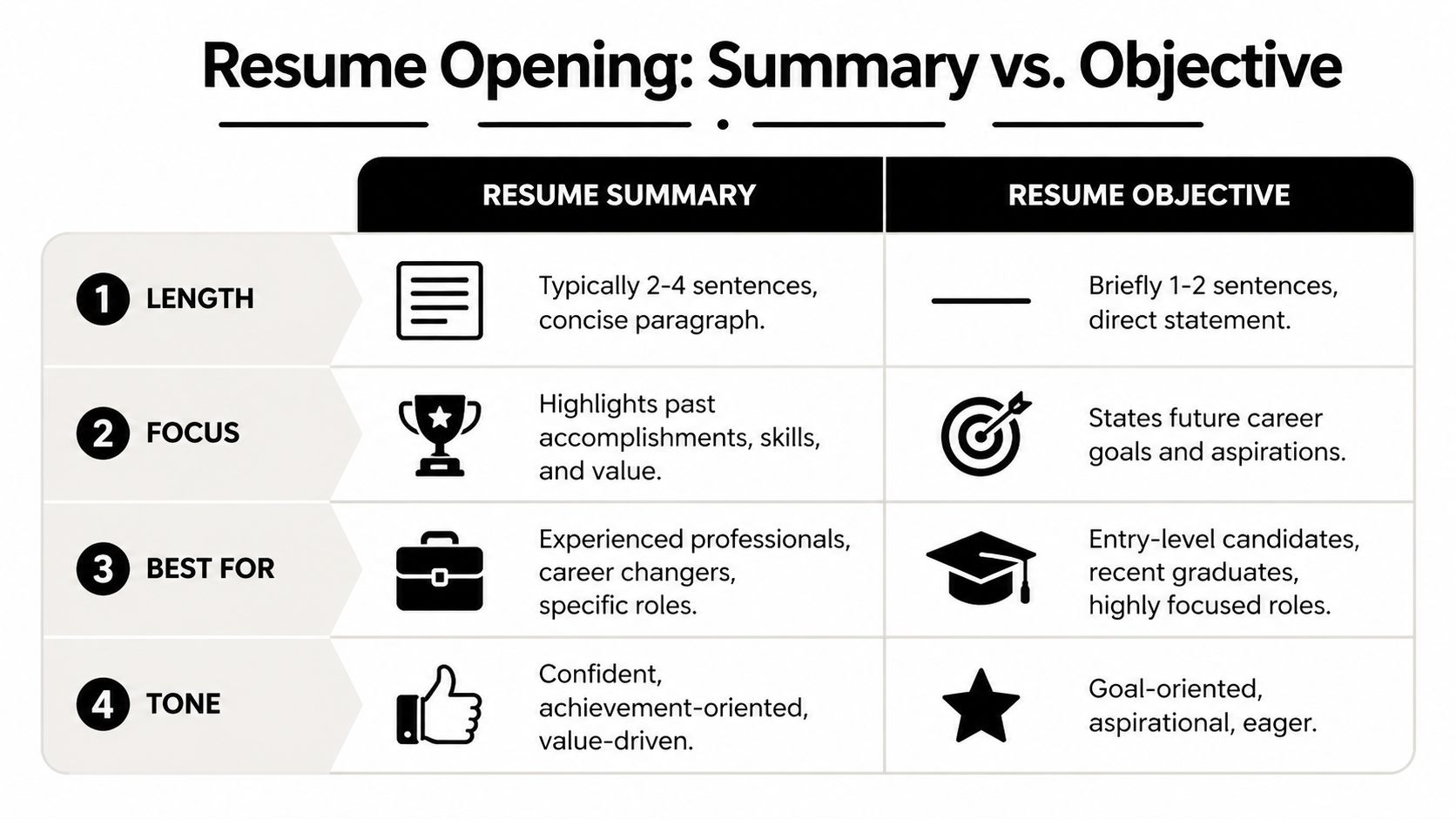
The difference isn't cosmetic. Summary and objective perform differently with recruiters and with ATS.
| Criteria | Resume summary | Resume objective |
|---|---|---|
| Purpose | Sells proven value and relevant qualifications | States target role and career direction |
| Recruiter reaction | Stronger for most professionals because it shows results quickly | Weaker for experienced applicants because it centers intent |
| ATS usefulness | Better for keyword density and role-specific language | Limited space for keywords and less room for evidence |
| Best length | Short paragraph with room for detail | Short statement with narrow use case |
Judge them by recruiter preference
The market has already decided this. By 2023, 80% of hiring managers preferred summaries, and for professionals with more than two years of experience, a well-written summary can increase interview callbacks by 15 to 20%, according to Indeed's resume summary vs objective guide.
That should end the debate. If you've done the work, lead with the work.
Practical rule: If your opening doesn't include proof of value and you have proof available, you've wasted the strongest real estate on the page.
Pay attention to ATS performance
ATS doesn't reward vague ambition. It rewards alignment.
If you're trying to pass automated screening, a summary gives you more room to include the exact terms that matter. That matters even more in keyword-heavy roles. If you need a broader walkthrough on this part, use this guide on making your resume ATS-friendly.
A summary also lets you front-load specifics such as:
- Tools: SQL, Tableau, Figma, Salesforce, Jira
- Functions: account management, product analytics, pipeline forecasting
- Outcomes: reduced turnover, improved retention, increased engagement
- Scope: managed enterprise clients, led cross-functional launches, supported onboarding
An objective usually can't carry that much useful information without becoming clumsy.
Use the right format length
The format tells you what each section is good at.
- Summary: A compact paragraph. Enough room for role, experience, skills, and proof.
- Objective: One or two sentences. Enough room for target role, a few relevant strengths, and a direct contribution statement.
A summary earns its space when you have actual content to summarize. An objective earns its space only when your resume needs an explanation before the reader reaches your experience section.
Choose Your Resume Opening Based on Your Career
A frequent challenge arises at this point. Individuals grasp that summaries are generally more impactful, yet they struggle to determine the best approach for their particular circumstances.
Use the rule tied to your career stage, not your personal preference.
Use an objective if you're a student or recent graduate
If you don't have relevant experience yet, don't fake a summary. That creates fluff. Use an objective and make it targeted.
Your objective must include three things:
- Your target role
- Your strongest relevant skills
- What you can contribute right away
Example:
Computer science student seeking a junior QA analyst role to apply testing, documentation, and debugging skills developed through coursework and project work while supporting reliable product releases.What not to write:
Seeking a challenging position where I can grow and utilize my skills.That says nothing. Cut every generic phrase like "challenging position," "dynamic company," and "opportunity to learn."
Use a hybrid if you're changing careers
Career changers need a bridge. A pure objective often sounds weak because it focuses too much on what you want. A pure summary can sound confusing because your past titles may not match the role you're targeting.
Use a hybrid. Lead with transferable strengths and proven results, then point directly at the new role. For career changers, a hybrid can outperform a pure objective by up to 25%, and summaries that integrate job-specific keywords can increase ATS compatibility by 40 to 60%, according to Extern's guide on resume objective vs summary. If you're making that shift now, this guide on writing a career change resume is worth using alongside your opening statement.
Example:
Operations coordinator with experience improving workflows, training staff, and managing deadlines across fast-moving teams. Transitioning into project coordination roles and bringing strong scheduling, stakeholder communication, and process documentation skills.That works because it doesn't pretend you already held the new title, and it doesn't force the employer to connect the dots.
For career changers, the top of the resume must translate. Don't make the recruiter interpret your background for you.
This video gives a useful visual breakdown of how to make that choice and phrase it cleanly.
Use a summary if you're an experienced professional
If you have two or more years of relevant experience, stop considering an objective. Use a summary. That isn't a style preference. It's the correct move for most applications.
Your summary should do four jobs fast:
- Name your role and level
- Show your core skills
- Prove one or two outcomes
- Align with the target job
Example:
Product analyst with experience in experimentation, KPI reporting, and user behavior analysis across web and mobile products. Built dashboards in SQL and Tableau, partnered with product managers on roadmap decisions, and supported feature changes using usage and retention data.This is also where executives and senior managers should be strict. Do not use an objective at the top of a director, VP, or head-of resume. It weakens your positioning immediately.
Make the decision in under a minute
Use this quick test.
| Your situation | Correct opening |
|---|---|
| Relevant experience in the same field | Summary |
| No relevant experience yet | Objective |
| Changing fields and need a bridge | Hybrid |
| Senior leadership role | Summary |
If you still feel undecided, pick the version that gives the employer evidence sooner. That's usually the summary.
Write an Effective Summary or Objective
Choosing the right format is only half the job. Bad execution ruins both.
Write a summary that proves value
A strong summary is short, specific, and built from evidence. Keep it around 40 to 60 words so you have room for substance without turning it into a paragraph nobody reads. That length usually allows 5 to 7 high-value keywords, while an objective's shorter 25 to 40 word format usually fits only 3 to 4. For tech and product roles, summaries with specific metrics parse 15 to 30% more accurately in ATS, and ATS is used by over 90% of Fortune 500 companies, according to the Bauer College breakdown of resume summaries and objectives.
Use this formula:
[Target role or current role] with [relevant experience or domain strength] in [skill 1], [skill 2], and [skill 3]. Delivered [specific outcome or scope]. Ready to support [target function or business need].Example:
Data analyst with experience in SQL, dashboard reporting, and experimentation analysis. Built reporting workflows for product and marketing teams, improved visibility into funnel performance, and supported faster decision-making with clear KPI tracking.If you want a broader walkthrough beyond the opening section, this guide on how to create an effective resume is a useful reference because it connects the summary to the rest of the document.
Cut filler from your summary
Most summaries fail because they rely on adjectives instead of proof.
Bad:
Hardworking marketing professional with excellent communication skills and a passion for helping companies succeed.Better:
Marketing specialist with experience in lifecycle campaigns, email performance tracking, and content coordination across product launches. Supported audience segmentation, reporting, and campaign execution in fast-paced B2B teams.Use nouns and verbs that match the job description. Cut empty claims like:
- Avoid: hardworking, go-getter, team player, results-oriented
- Use instead: managed, analyzed, built, launched, supported, improved
Write an objective only when the resume needs direction
An objective should be one clear sentence. It must name the role, show relevant strengths, and connect those strengths to business value.
Use this formula:
Seeking a [target role] to apply [relevant skills, training, coursework, or transferable strengths] to support [team, department, or business goal].Example for a graduate:
Seeking an entry-level financial analyst role to apply Excel, research, and reporting skills developed through coursework and internship experience to support accurate forecasting and decision-making.Example for an internship applicant:
Seeking a software engineering internship to apply Python, debugging, and collaborative project experience to support reliable feature development and testing.Tailor the opening to the job description
Resume objective vs summary becomes an ATS question, not just a writing question. The opening must mirror the language of the job posting.
Pull keywords from the posting and place them naturally in your opening:
- Job title: customer success manager, junior data analyst, product designer
- Core tools: Salesforce, SQL, Figma, Excel
- Key functions: onboarding, reporting, wireframing, forecasting
- Priority outcomes: retention, accuracy, process improvement, launch support
If you need a process for doing this quickly, use this guide on tailoring your resume to a job description.
Match the employer's terms exactly when they're accurate. If the posting says "customer success," don't replace it with "client relations" just to sound different.
Use before and after rewrites
These examples show the difference between generic writing and usable writing.
Summary rewrite
Before:
Experienced HR professional looking for a role where I can use my background and grow professionally.After:
HR professional with experience in recruiting, onboarding, and employee support across high-volume teams. Managed hiring coordination, improved interview scheduling flow, and supported a smoother onboarding process for new hires.Objective rewrite
Before:
To obtain a position that will allow me to use my skills and learn new things.After:
Seeking a junior operations role to apply scheduling, documentation, and process support skills developed through administrative work and academic projects.Keep the opening honest
Don't claim outcomes you can't defend in an interview. Don't invent metrics. Don't inflate your title. Don't write a summary if your work history doesn't support one.
The opening is not the place to sound impressive. It's the place to sound credible.
What to Do Now
Do this in order.
- Identify your category. Mark yourself as experienced, entry-level, or career changer. That determines summary, objective, or hybrid.
- Pull keywords from one target job description. Highlight the title, tools, core skills, and expected outcomes. Use those words in your opening where they are true.
- Draft the opening in plain language. Keep it tight. Summary if you have relevant experience. Objective if you don't. Hybrid if you're bridging fields.
- Check the rest of the resume for alignment. Your opening must match your bullet points, skills section, and job titles. If the top promises analytics, operations, or leadership, the rest of the page has to prove it.
If you also need help tightening the rest of your application package, this guide on how to write an effective resume and cover letter is a practical next read.
The point is to decide fast and write the correct opening once. Don't keep both. Don't hedge. Pick the version that gives evidence earliest and supports the role you're targeting.
If you want to turn a job description into a customized, ATS-ready resume faster, Resumatic does the heavy lifting. Paste the posting, pull in the right keywords, build a stronger summary, and check your resume score before you apply.
Produced via Outrank tool
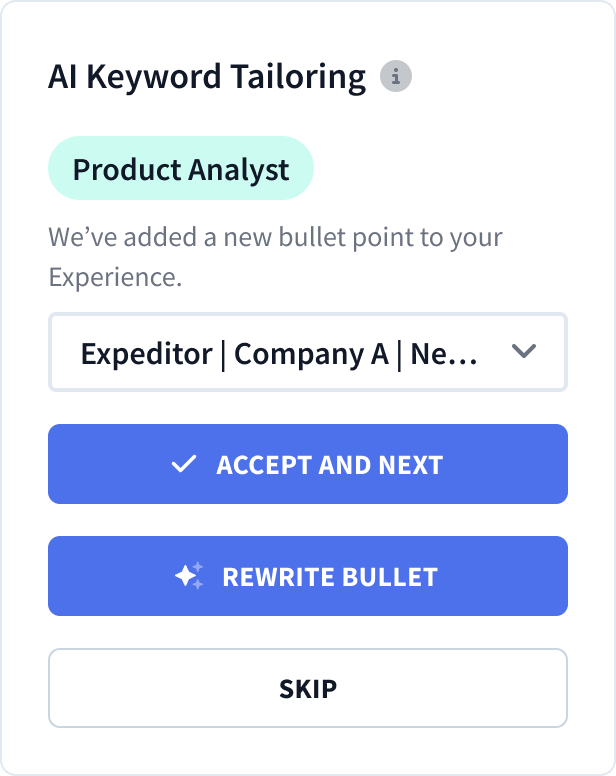
Automatic AI Resume Tailoring
Customize your resume with AI-guided precision.


